


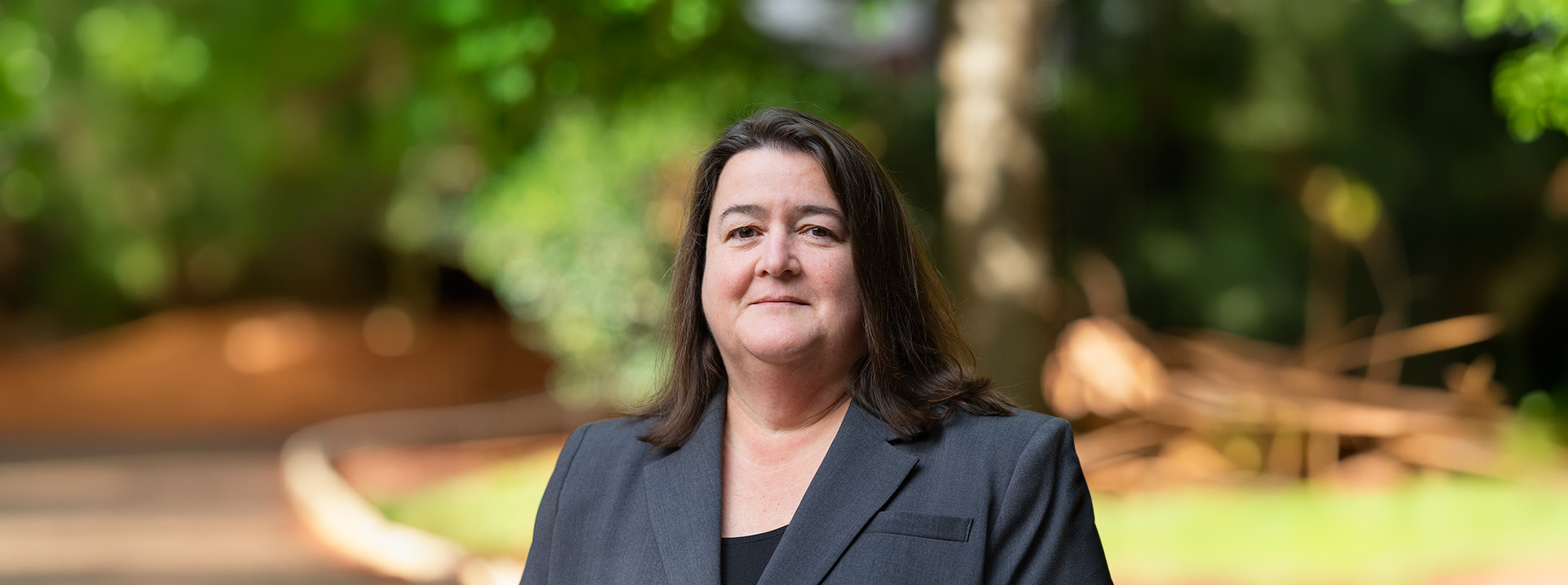

Paula Guffey: A Career Built to Last
Her next career move took her to facilities engineering, witha focus on laboratories, campus infrastructure, office renovations, and highly specialized spaces such as satellite and chip labs. She also gained experience from the owner and facilities side, which gave her a broader understanding of how buildings function long after design is complete.
When she joined the Navy as a civilian utilities engineer, she worked on redesigning the protective relay system for their power plant and modifications of the medium- and high-voltage transmission and distribution across the base. With this, her work expanded beyond standard building design into critical power systems and utility infrastructure.
After that, she returned to consulting, where she helped build business operations and teams, leading work for an architectural client, and supporting other design-build clients. From 2004 to 2011, Paula started her own small boutique firm, providing mechanical, electrical, and plumbing (MEP) design services for the U.S. Department of Defense, the U.S. General Services Administration, Starbucks stores across the Mid-Atlantic, and more. After running her own firm, she joined TMR Engineering, where she was a partner from 2011 to 2015, until the company joined CMTA in 2016. Today, Paula describes herself as a principal engineer, responsible for client management, project management, quality assurance, quality control, business development, marketing, and long-term relationship building.
Looking back on Paula’s incredible variety of experiences across her career, there is one project that stands out to her. At just 26 years old, and while she was pregnant with her son, she was trusted to help lead a project to create Tamarack, a folk arts facility in Beckley, West Virginia. Her boss at the time told her, “You cannot have the baby until the project is done!” Paula turned in her finalized drawings on a Saturday and delivered her son the next Monday. She vividly remembers the architect’s vision for this facility was to make it look like a flower and stem from the aerial view. But Paula didn’t work in isolation, simply focused on the look of the building; she met the blacksmiths, glass artists, painters, and sculptors, and watched how they worked to determine what they needed in the facility. As for why Paula continues to be thankful for this project: “One of the reasons I love this business is because you can leave a legacy.”
When Paula is not working, she enjoys woodworking, skiing, golfing and riding trail bikes. One fun fact Paula enjoys sharing is how she built her own timber frame house with help from her two sons, explaining, “Anything worth having is worth working for.” The family didn’t just work on the outside of the home, but also finished the electrical, plumbing, and interiors together.
Paula’s enthusiasm for CMTA extends beyond the office. She joked that she “sells this business everywhere” she goes, no matter if she’s meeting someone at church, in the mall, or even out on a kayak! This is a great reflection of how deeply she believes in the company and the people behind it.


