




How Jen Lessick gets people to a common “yes”
“I am facilitating all of the people in the room to get to a common yes,” she said. “So I am absolutely every day using those types of communication skills that you would learn in a typical negotiation class.”
At George Washington University, Jen studied international affairs before focusing more closely on environmental studies and geography. After college, she worked at a clean energy nonprofit focused on wood stove technology, then at the World Resources Institute. She later earned her graduate degree in environmental studies and energy management from the University of Pennsylvania, where she worked on Solarize Philly, a residential solar program for low- and moderate-income residents. Solarize Philly was, where she cut her teeth in renewables. Before joining Black Bear Energy in 2021, Jen spent about a year at Pacific Northwest National Laboratory researching renewable energy, including floating solar and coal plant decommissioning.
Today, Jen is Senior Vice President of Client Operations at Black Bear Energy. Her five-person team works with more than 60 active clients, including some of the country’s top real estate owners. The team serves as the main point of contact for clients and helps determine which projects to prioritize.
Inside Black Bear Energy, they call themselves the “driver team.”
“We’re the ones driving the car and everyone else is getting in and we’re driving us to where we’re going.”
The team also helps lead Black Bear Energy’s annual solar boot camp, a two-day gathering in Aspen, Colorado. The boot camp gives clients a chance to hear what challenges other real estate owners are running into, something they don’t necessarily get inside their own companies. Black Bear Energy gets to hear directly from them, too.
“We learn so much from our real estate owners when they’re all in a room together,” she said. “We get so much value from understanding what their pain points are so that Black Bear can better serve them.”
One of Jen’s favorite projects is what she described as the largest rooftop community solar project in Washington, D.C. It was among the first projects she worked on at Black Bear Energy and took roughly four years to build. The electricity the project generates serves low- and moderate-income households in the area.
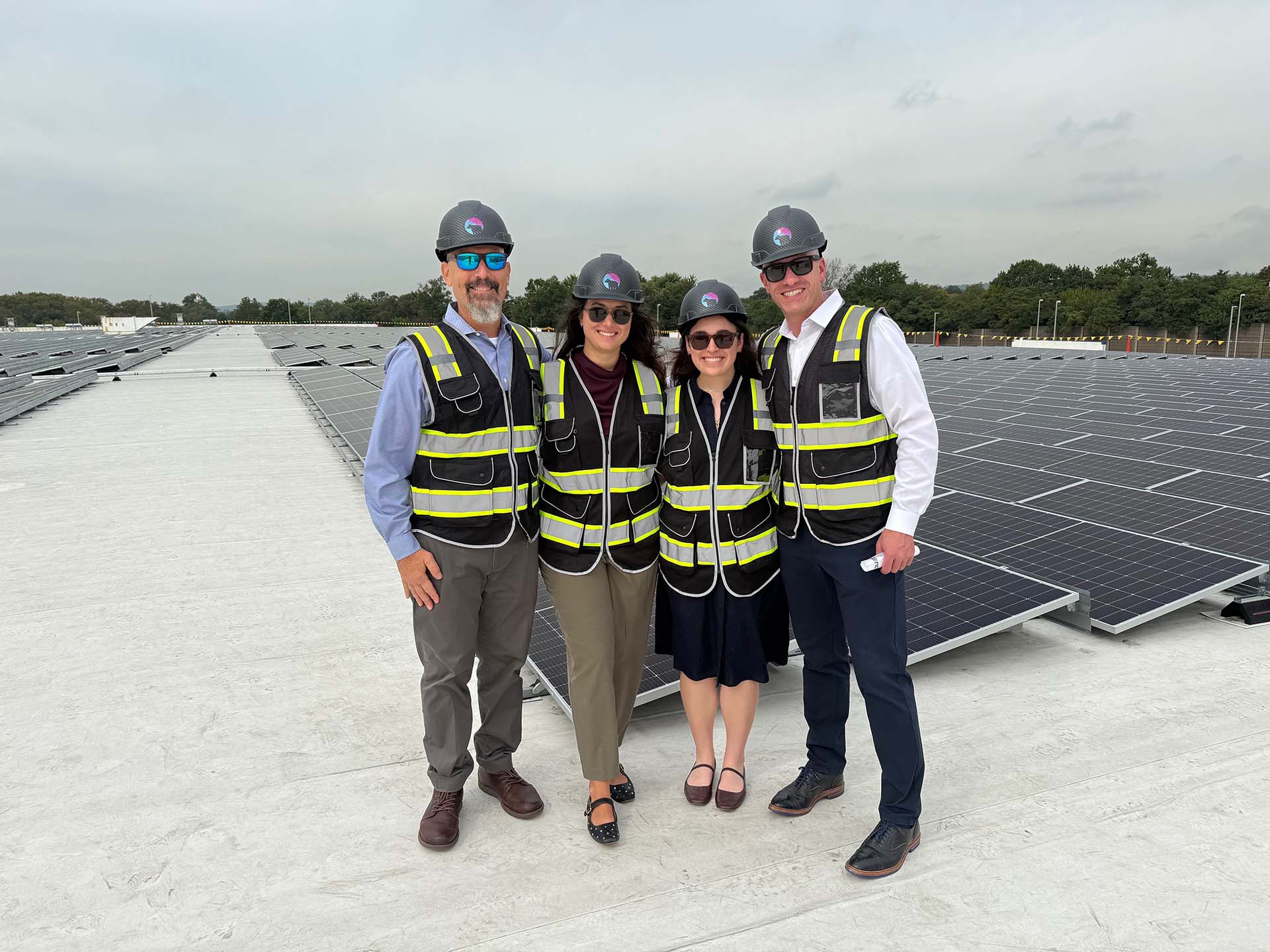
At one point, the project nearly stalled over a basic question: Where could they put the equipment?
There wasn’t much room at the Northeast D.C. site, so the developer worked with the utility to pole-mount equipment instead. Then, they had to find locations that worked for the tenant, landlord, developer, and utility. That took about four months, with teammate Drew Carney leading the effort.
“It was very touch-and-go there for a minute because if we couldn’t find a spot for that equipment, the project would have died,” Jen said.
Projects like this are also changing. She stated Black Bear Energy’s work has expanded beyond solar to include battery storage, virtual power plants, and utility programs.
When asked about the future of the industry, Jen replied, “The energy landscape is changing, and faster than you can even think.”


