


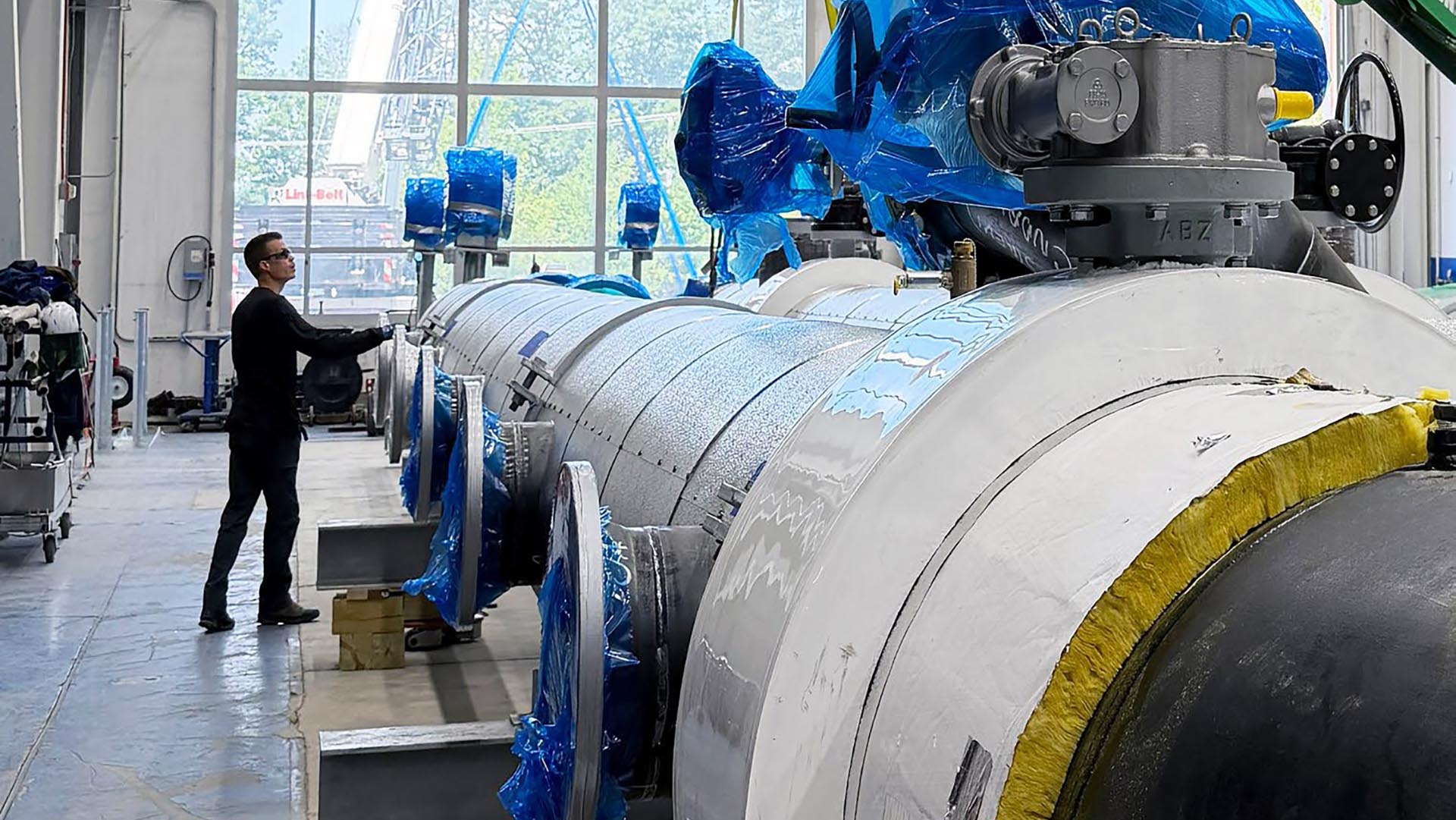

Beyond the Fabrication Floor: Why Partnerships Power OSM
As OSM has evolved from an exception to an expectation, the focus has also shifted from adoption to smarter execution. The challenge now is delivering increasingly complex mechanical systems with the same predictability that made prefabrication attractive in the first place. As the industry moves from project-based applications toward programmatic delivery, two priorities rise to the forefront: mechanical integration and reliable production partnerships.
As computing density rises and liquid cooling expands, prefabricated scope is progressing from pipe racks and skids toward coordinated systems with more interfaces, controls, and performance dependencies. Success depends on more than fabrication precision. It requires mechanical integration; bringing design, fabrication, supply chain, and field execution together before production begins. Shared modeling tools provide visibility into system coordination and design decisions.
The mechanical integrator becomes accountable not simply for making parts, but for resolving interfaces and prioritizing system performance from model through commissioning.
"Early alignment turns prefab from a manufacturing exercise into a delivery strategy," said Felix Gonzalez, Director of Manufacturing and Prefabrication Operations at Therma, a Legence company. "It gives the client confidence in the outcome with the flexibility to adapt to changes or new requirements."
The most effective OSM programs are built on relationships established long before fabrication begins. Those partnerships provide the foundation to secure capacity, scale operations, and maintain accountability as computing and construction needs evolve.


